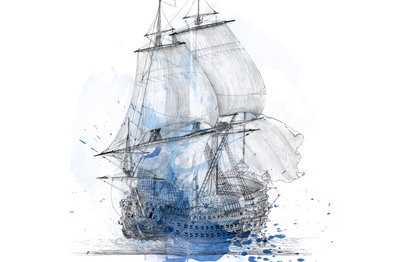
Floating Baroque
The exhibition shows the mutual influence between royal ship design and monumental architecture, and how this development helped generate the central motifs of Late Baroque art, known as Rococo. At the center of it all is the evolution of the ship’s stern, especially in Baroque France. Shipbuilding there was marked by strict organizational structures, highly qualified artists and scientists, and close personal links to the world of palace architecture. For precisely these reasons – thus the hypothesis of the exhibition – the origin of Rococo can be traced to French shipbuilding of the time.
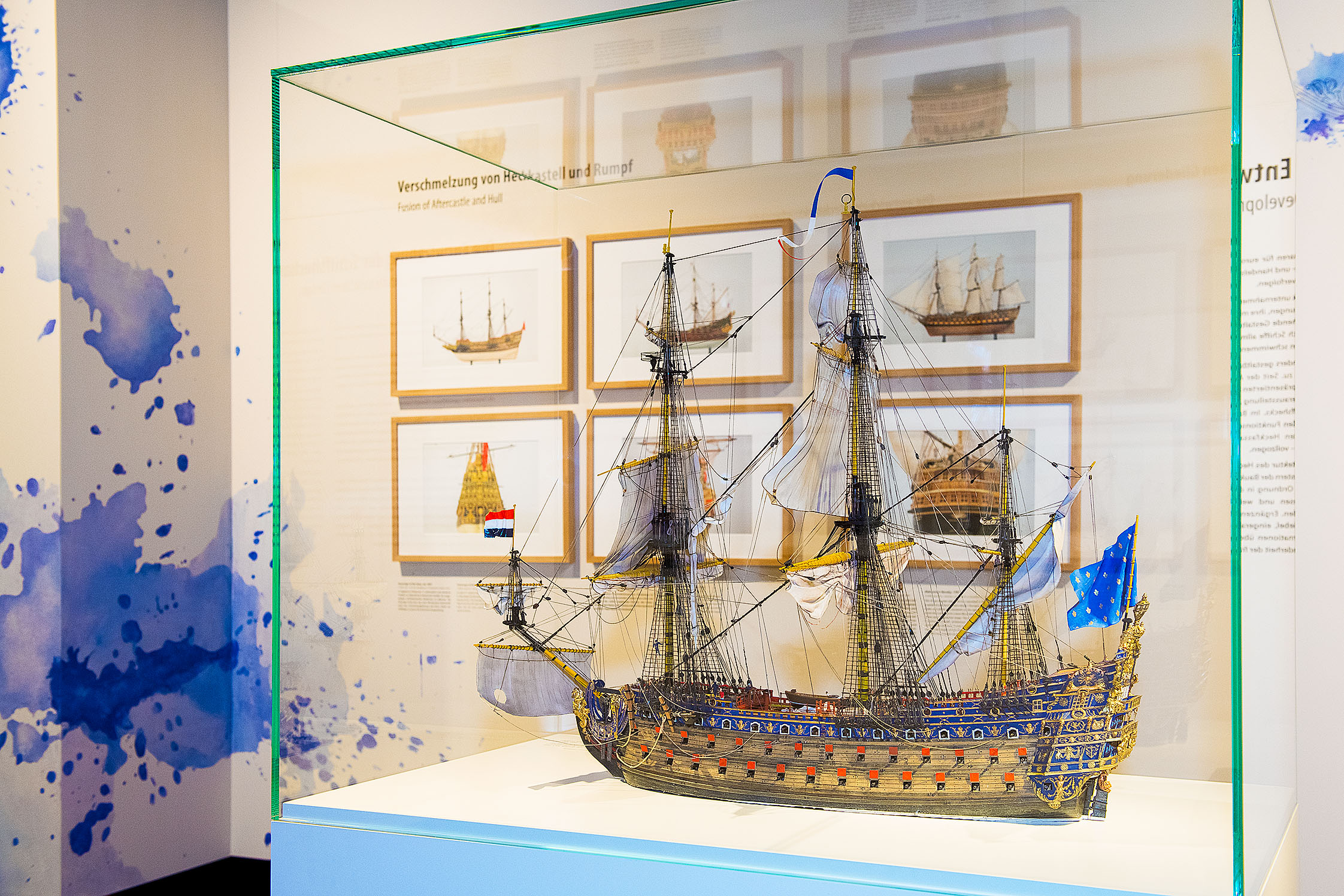
On loan from the International Maritime Museum Hamburg, Photo: SDTB / C. Kirchner 1/1
Architecture as a Means of Portraying Sovereign Power
It was above all absolute rulers like the “Sun King,” Louis XIV, and his successor Louis XV who invested major resources in the portrayal of royal authority. This effort was not limited to monumental buildings on land. Three-masted sailing ships, whose stern area could be seen far and wide, were also designed to look like palaces. In the process the stern was transformed from a purely functionally, partially decorated part of the ship into a veritable building facade.
This architectural method of constructing ships – called architectura navalis, or ‘naval architecture’ – began a new chapter in the history of navigation. Ships exhibited typical elements of Baroque architecture familiar from chateaus and palaces: division into three levels, ceremonial balconies, ceremonial doors, cornices, pediments, portrait medallions, risalits, squinches, pedestals, and hood moulds.
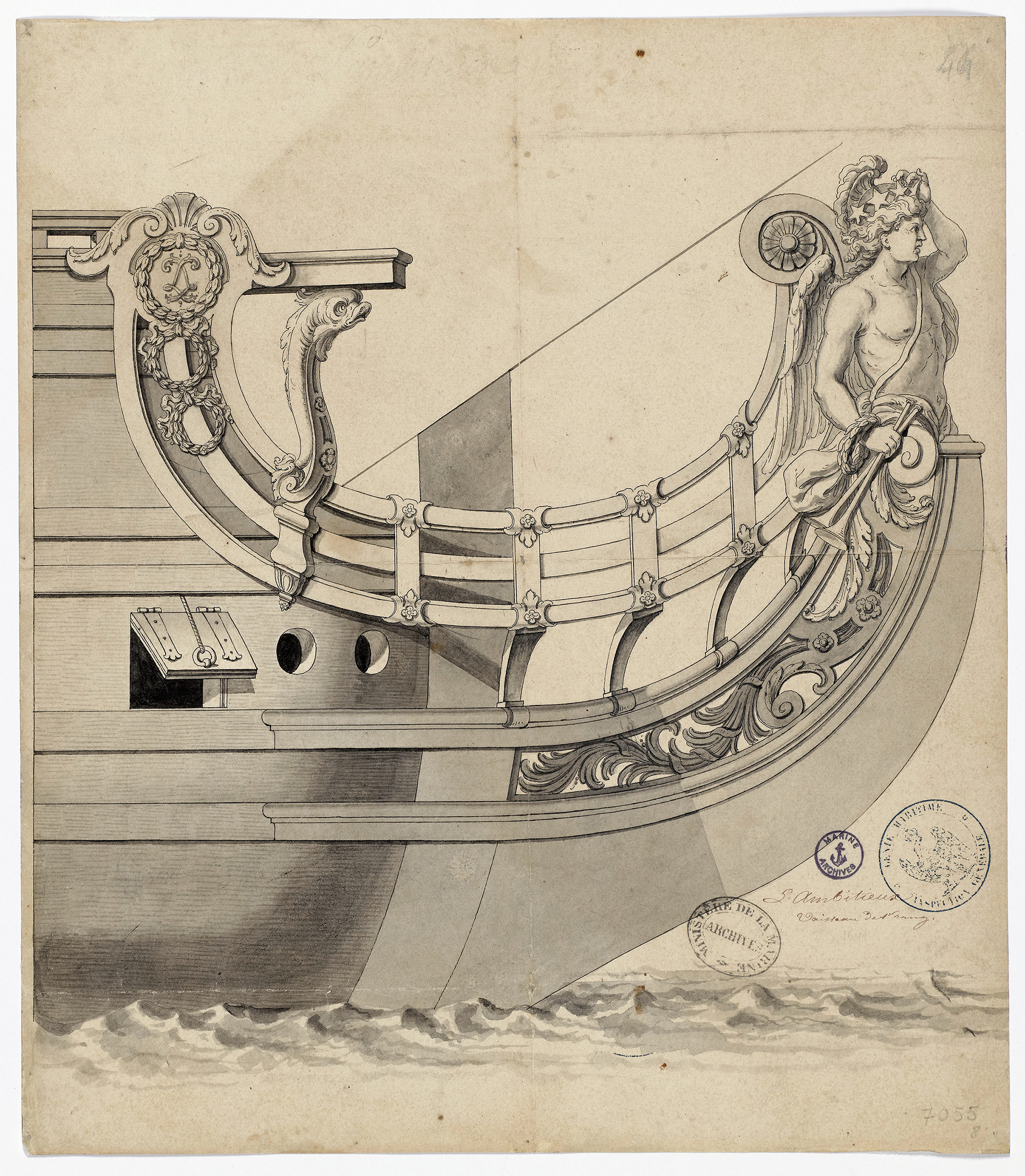
© Service historique de la Défense, Vincennes 1/1
Transfer from Land to Sea, and Back Again
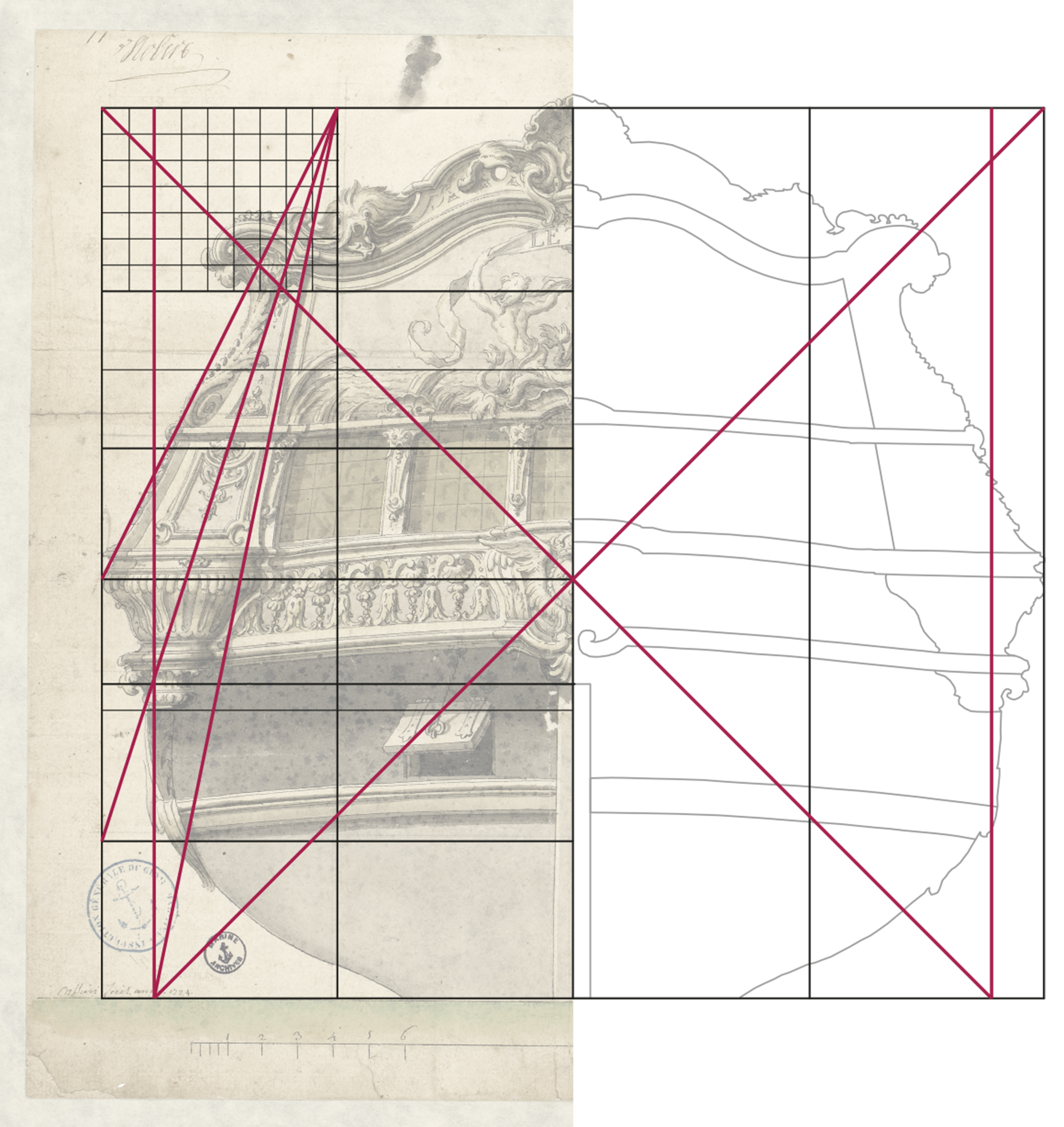
Over a series of creative steps, the architectural components and design principles of monumental facades on land were adapted to fit the complex form of the ship’s hull. Decorative elements, such as the shell ornamentation long found on ships, were also incorporated into this process and transformed in a special way. The process of design transfer did not go in merely one direction.
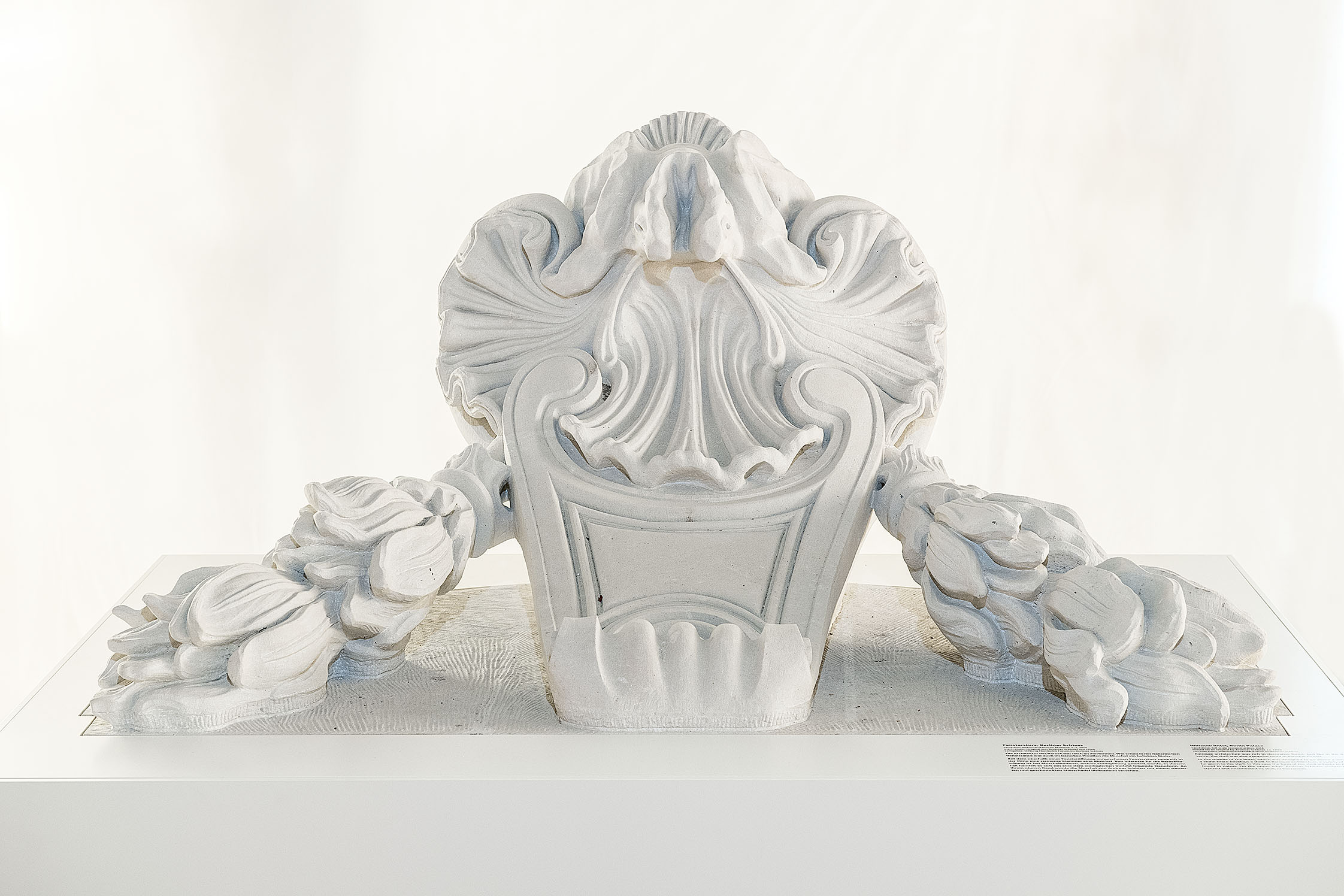
After land-based architecture was adapted to ships, the Rococo period witnessed a formal retranslation from sea back to land. The asymmetries, spatial divisions, and contours of ship architecture – especially with the motif of the scalloped shell edge – were incorporated into the interior design of monumental buildings.
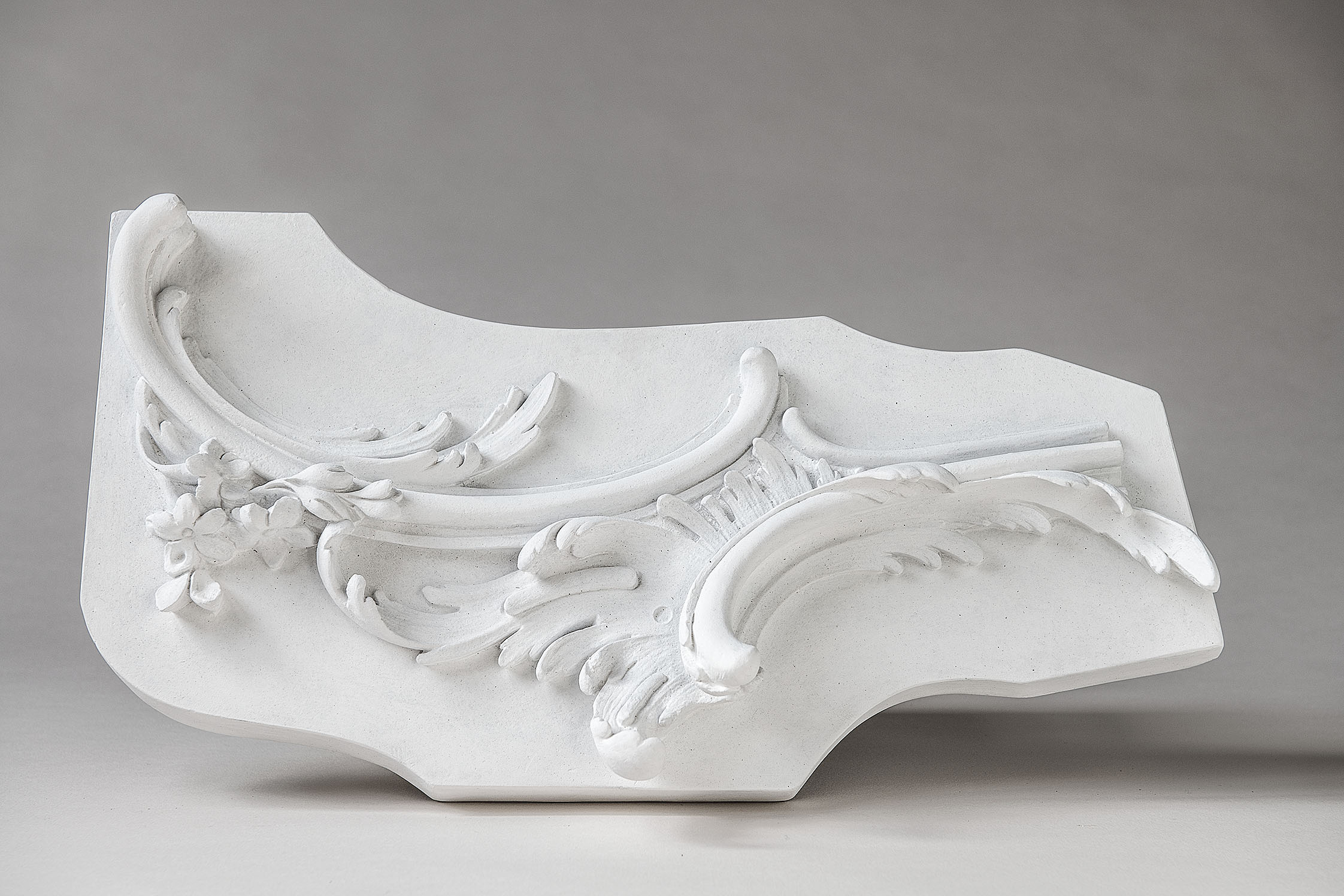
Plaster cast after the original by François de Cuvilliés the Elder, Augustusburg Palace, Brühl, 1728.
On loan from the Plaster Casting Workshop of the Staatliche Museen zu Berlin, Photo: SDTB / C. Kirchner 1/1
Magnificent Model Ships, Giant Clam Shells, and Design Drawings
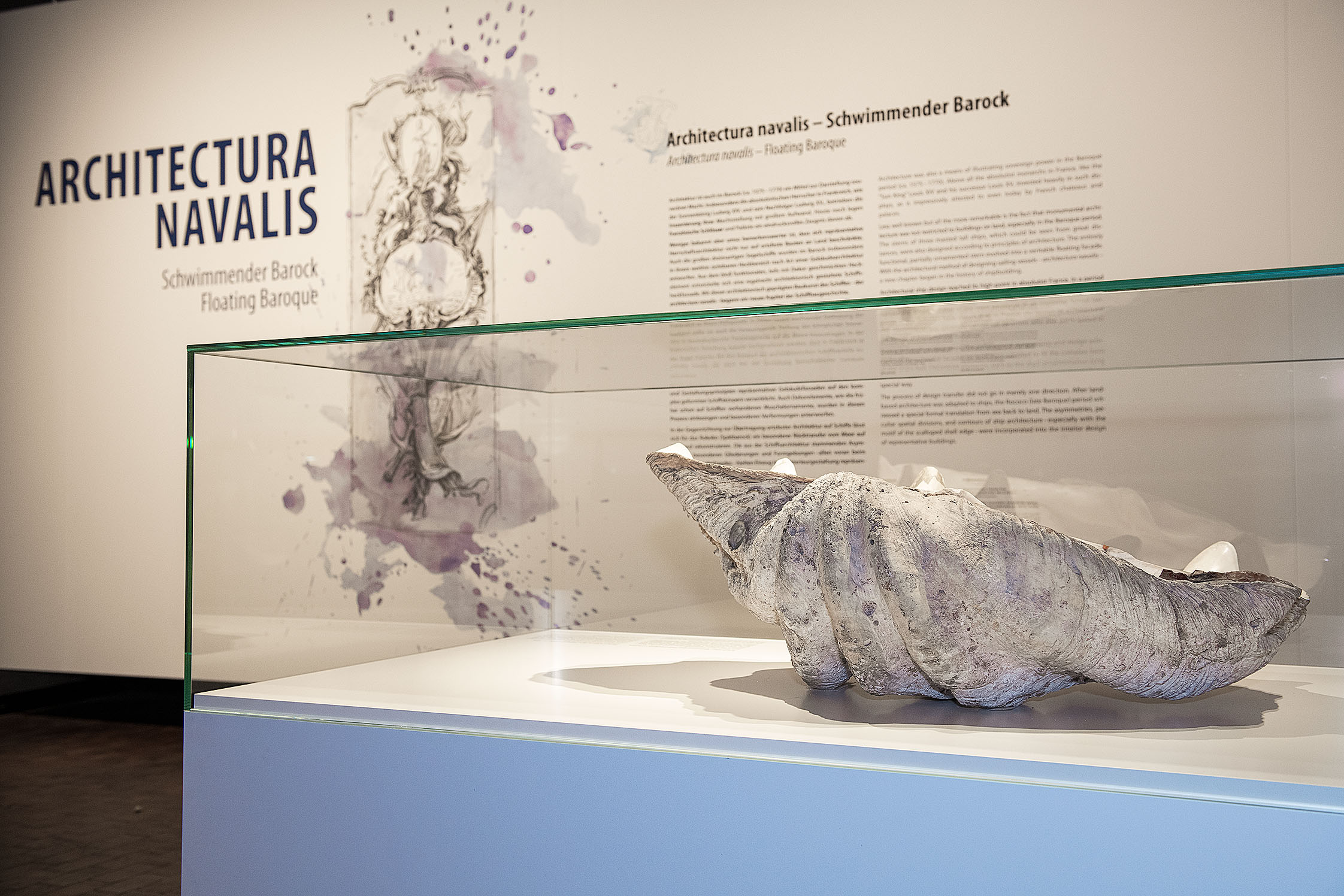
Exquisite model ships, art objects, design drawings, and architectural fragments are displayed over 250 square meters of exhibition space. Highlights include an eighteenth-century construction model of a ship with the ribs exposed, a giant clam shell with a diameter of ca. 100 cm, and reproductions of stunning plans sketched by the leading ship designers – Jean Bérain (1640-1711) and François-Antoine Vassé (1681-1736) – on whose basis real ships were built.
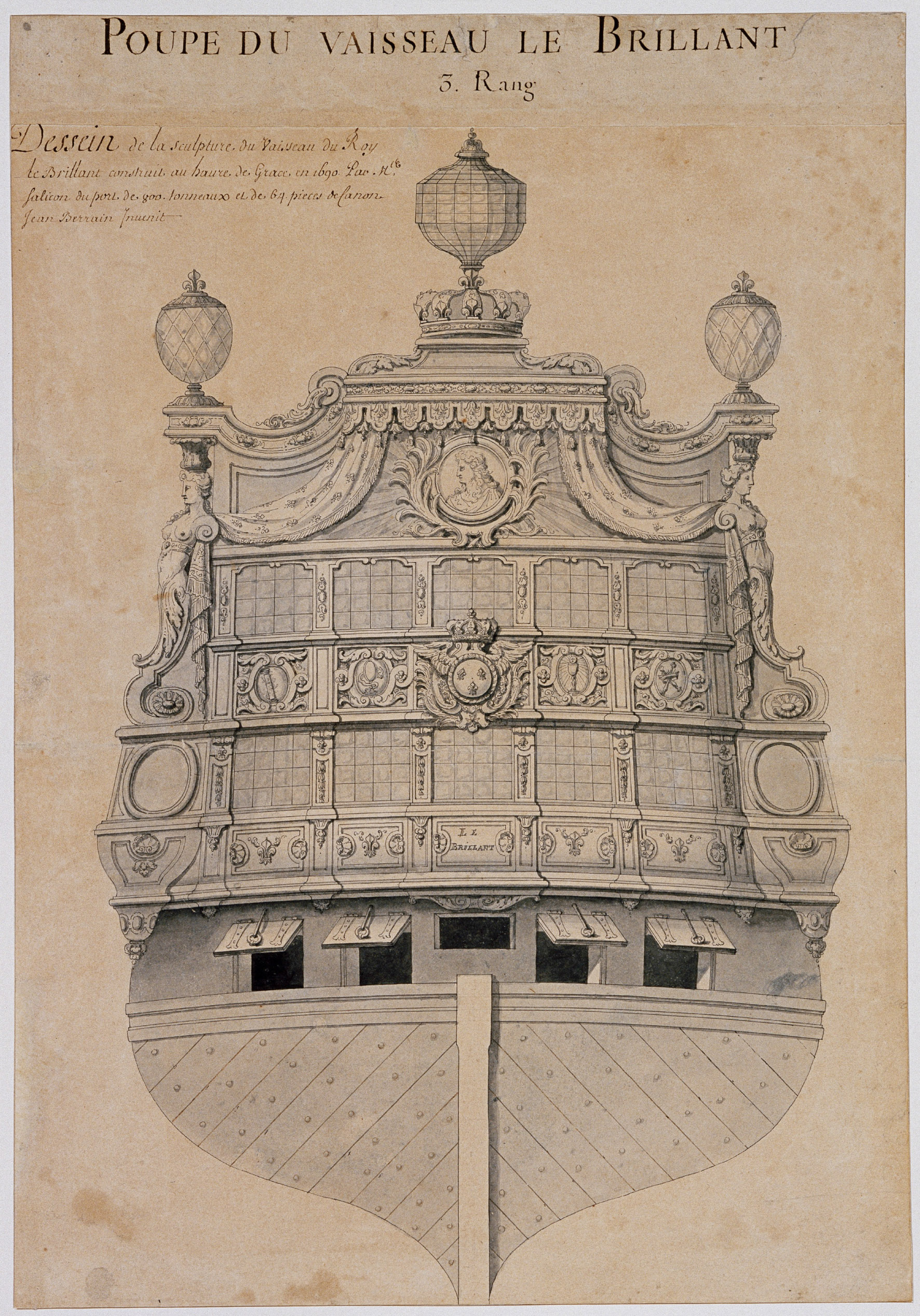
© Musée national de la Marine, Paris 1/4